- Dates
- Keynote Speakers
- Call for Papers
- Schedule
- Accepted Papers
- Awards
- Organizers and PC
- Previous Workshops
23rd International Workshop on
Mining and Learning with Graphs
Friday 11 September 2026, Naples, Italy, jointly with ECMLPKDD2026
Important Dates
- Paper submission deadline: 8. June
5. June 2026
- Paper acceptance notification: 01. July 2026
- Camera ready submission deadline: 31. July 2026
- Workshop date: Friday, 11. September 2026
- All deadlines expire 23:59 AoE
Keynotes

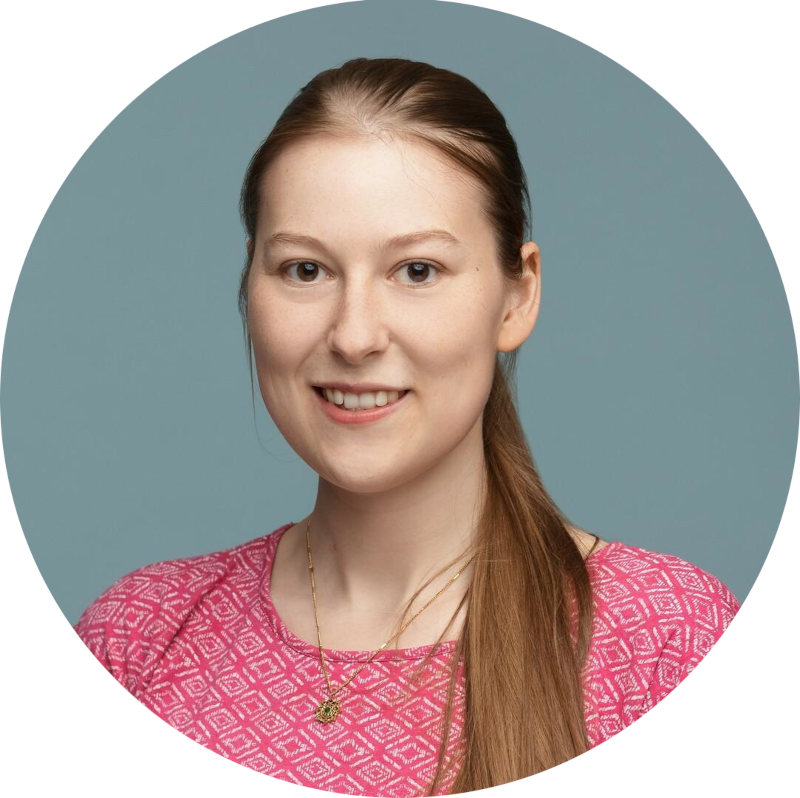
Johannes Lutzeyer
École Polytechnique
Johannes Lutzeyer is an Assistant Professor in the Data Science and Mining Team at the Laboratoire d'Informatique of École Polytechnique (France). He previously completed a postdoc under the supervision of Prof. Michalis Vazirgiannis at École Polytechnique, and did his PhD on the spectral properties of the adjacency and Laplacian matrices under the supervision of Prof. Andrew Walden at Imperial College London.
His research focuses on Graph Neural Networks and Spectral Properties of Graph Shift Operator Matrices.

Martin Ritzert
Leipzig University
Martin Ritzert is a Junior Group Leader at Leipzig University (Germany) where his research is on graph machine learning and particularly on graph generation for neuronal morphologies and biological trees. During his PhD at RWTH Aachen University and his postdoc at Aarhus University he worked on the theoretical underpinnings of machine learning, before moving towards more practical machine learning and data science topics at University of Göttingen and Leipzig University. The title of the talk is "Growing beech and oak trees: Generative machine learning for 3D graphs".
Call for Papers
This workshop is a forum for exchanging ideas and methods for mining and learning with graphs, developing new common understandings of the problems at hand, sharing data sets where applicable, and leveraging existing knowledge from different disciplines. The goal is to bring together researchers from academia and industry to create a forum to discuss recent advances in graph analysis.
In doing so, our aim is to better understand the overarching principles and limitations of current methods and to inspire research on new algorithms and techniques for mining and learning with graphs.
To reflect the broad scope of work on mining and learning with graphs, we encourage submissions that span the spectrum from theoretical analysis to algorithms and implementation to applications and empirical studies.
We are interested in the full spectrum of graph data, including but not limited to attributed graphs, labeled graphs, knowledge graphs, evolving graphs, transactional graph databases, etc.
We therefore invite submissions on theoretical aspects, algorithms and methods, and applications of the following (non-exhaustive) list of areas:
- Computational or statistical learning theory related to graphs
- Theoretical analysis of graph algorithms or models
- Semi-supervised learning, online learning, active learning, transductive inference, and transfer learning in the context of graphs
- Unsupervised learning and graph clustering
- Interesting pattern mining on graphs and community detection
- Graph kernels and metric learning on graphs
- Graph and vertex embeddings and representation learning on graphs
- Solving combinatorial problems on graphs with ML / data-driven combinatorial optimization
- Explainable, fair, robust, and/or privacy-preserving ML on graphs
- Statistical models of graphs and graph sampling
- Analysis of social media, chemical or biological networks, infrastructure networks, knowledge graphs
- Benchmarking and reproducibility aspects of graph-based learning
- Libraries and tools for all of the above areas
We welcome many kinds of papers, such as, but not limited to:
- Novel research papers
- Demo papers
- Dataset papers
- Work-in-progress papers
- Visionary papers (white papers)
- Appraisal papers of existing methods and tools (e.g., lessons learned)
- Relevant work that has been previously published
- Work that will be presented at the main conference (can be submitted with the regular 16-page limit of ECMLPKDD)
Submission Guidelines: Authors should clearly indicate in their abstracts the kinds of submissions that the papers belong to, to help reviewers better understand their contributions.
All papers will be peer-reviewed (single-blind).
Submissions must be in PDF, long papers no more than 12 pages long, short papers no more than 8 pages long, formatted according to the standard Springer LNCS style required for ECMLPKDD submissions.
References, acknowledgments, and appendix do not count towards the page limit.
The accepted papers will be published on the workshop website and will not be considered archival for resubmission purposes.
Authors whose papers are accepted to the workshop will have the opportunity to participate in a pitch and poster session, and the best four will also be chosen for oral presentation.
Papers should be submitted via CMT: https://cmt3.research.microsoft.com/ECMLPKDDWT2026. Please select the MLG: Mining and Learning with Graphs track.
Post-Workshop Springer Proceedings: High quality, original, non-dual-submitted papers will be invited to be published in post-workshop proceedings, assuming that ECMLPKDD offers them as in previous years.
Dual Submission Policy:
We accept submissions that are currently under review at other venues.
However, in this case, our page limits apply.
Please also check the dual submission policy of the other venue.
Schedule
| 10.30h | Welcoming |
| 10.40h | Keynote
Johannes Lutzeyer
Generalisation of Graph Neural Networks
|
| 11.40h | Contributed Talk
Marek Cerny
Caterpillar GNN: Replacing Message Passing with Graph-Level Aggregation.
|
| 12.00h | Contributed Talk
Raffaele Pojer, Andrea Passerini, Kim Guldstrand Larsen, Manfred Jaeger
Collective Node Classification through Neuro-Symbolic Integration.
|
| 12.20h | Spotlight Talks (Group A)
|
| 12.30h | Poster Session (Group A)
|
| 13.30h | Lunch Break |
| 14.30h | Contributed Talk
Peter Blohm, Florian Chen, Aristides Gionis, Stefan Neumann
On the Best Interval Approximation Problem.
|
| 14.50h | Contributed Talk
Florian Seiffarth
On the Edit Path to GNN Decisions.
|
| 15.10h | Spotlight Talks (Group B) |
| 15.20h | Poster Session (Group B)
|
| 16.00h | Coffee Break |
| 16.40h | Keynote
Martin Ritzert
How to Generate Trees and Other Graphs
|
| 17.40h | Closing Remarks and Awards |
Accepted Papers
-
Andrea D'Ascenzo, Julian Meffert, Petra Mutzel, Fabrizio Rossi (2026):
ExactGED: ILP Benchmarking and Optimal GED Dataset.
[group B]
[pdf]
-
Christian Mancini, Daniele Castellana (2026):
GraphVAEBM: Graph Generation Combining Variational Autoencoders and Energy-Based Models.
[group B]
[pdf]
-
Emely Weigel, Jan von Pichowski, Ingo Scholtes (2026):
Structure-Aware Graph Contrastive Learning via Degree-Preserving Rewiring.
[group A]
[pdf]
-
Florian Seiffarth (2026):
On the Edit Path to GNN Decisions.
[group B]
[pdf]
-
Kamel Abdous, Nairouz Mrabah, Mohamed Bouguessa (2026):
Heterophily-Aware Node Classification in Multiplex Graphs.
[group A]
[pdf]
-
Katharina Limbeck, Nadja Häusermann, Martin Carrasco, Guy Wolf, Bastian Rieck (2026):
Diversity Curves for Graph Representation Learning.
[group A]
[pdf]
-
Konrad Özdemir, Julia Gastinger, Lukas Kirchdorfer, Heiner Stuckenschmidt (2026):
Temporal Knowledge Graph Forecasting under Distribution Shifts: A Synthetic Evaluation.
[group B]
[pdf]
-
Manuel Dileo, Andrea Sottoriva (2026):
Applications of temporal graph learning for predicting the dynamics of biological systems.
[group A]
[pdf]
-
Marek Cerny (2026):
Caterpillar GNN: Replacing Message Passing with Graph-Level Aggregation.
[group A]
[pdf]
-
Marek Dědič, Michal Bělohlávek (2026):
Benchmarking and Transfer Learning for Hyperparameter Optimization of Graph Neural Networks.
[group B]
[pdf]
-
Nadi Tomeh, Hugo Attali (2026):
Local Evidence and Geometric Readout Repair in Trained GNNs.
[group B]
[pdf]
-
Oleksii Kolesnichenko, Jakub Peleška, Gustav Šír (2026):
Relational Task Generation Language: A Declarative Specification Framework for Relational Deep Learning.
[group A]
[pdf]
-
Patrick Indri (2026):
Bounded-load calibration splits for differentially private graph conformal prediction.
[group A]
[pdf]
-
Peter Blohm, Florian Chen, Aristides Gionis, Stefan Neumann (2026):
On the Best Interval Approximation Problem.
[group B]
[pdf]
-
Raffaele Pojer, Andrea Passerini, Kim Guldstrand Larsen, Manfred Jaeger (2026):
Collective Node Classification through Neuro-Symbolic Integration.
[group A]
[pdf]
-
Saku Peltonen, H. Çağrı Bilgi, Kubilay Atasu (2026):
Random Probing for Structural Self-Interactions in Graph Neural Networks.
[group B]
[pdf]
-
Taraneh Younesian, Steve Azzolin, Antonio Longa, Francesco Ferrini, Vincenzo Marco De Luca, Stefano Teso (2026):
Overcoming Shortcut Learning in Graph Neural Networks through Active Explanation Guidance.
[group A]
[pdf]
Awards
During the workshop we held two community votes. One for the best paper award as well as one for the best poster award. Congratulations!
Best Paper
-
Raffaele Pojer, Andrea Passerini, Kim Guldstrand Larsen, Manfred Jaeger (2026):
Collective Node Classification through Neuro-Symbolic Integration.
[group A]
[pdf]
Best Poster
-
Katharina Limbeck, Nadja Häusermann, Martin Carrasco, Guy Wolf, Bastian Rieck (2026):
Diversity Curves for Graph Representation Learning.
[group A]
[pdf]
Program Committee
- Alessia Lucia Prete (University of Siena)
- Andrea D'Ascenzo (Gran Sasso Science Institute)
- Antonio Longa (University of Trento)
- Ben W. G. Cullen (University of Pisa)
- Celia Rubio-Madrigal (CISPA Helmholtz Center for Information Security)
- Fabrizio Frasca (Imperial College London)
- Federico Errica (NEC Laboratories Europe)
- Florian Seiffarth (University of Bonn)
- Francesco Flaviano De Santis (TU Wien)
- Giuseppe Alessio D'Inverno (SISSA)
- Ilie Sarpe (KTH Royal Institute of Technology)
- Ingo Scholtes (University of Würzburg)
- Jakub Peleška (Czech Technical University in Prague)
- Jan von Pichowski (University of Würzburg)
- Karen K. Wurzel (Marquette University)
- Katharina Limbeck (Helmholtz Munich, TU Munich)
- Klaus Weinbauer (TU Wien)
- Konrad Özdemir (University of Mannheim)
- Lovro Šubelj (University of Ljubljana)
- Manuel Dileo (Human Technopole)
- Marek Cerny (Uantwerpen)
- Marek Dědič (Czech Technical University in Prague)
- Nimrah Mustafa (CISPA Helmholtz Center for Information Security)
- Pascal Plettenberg (University of Kassel)
- Patrick Indri (TU Wien)
- Peter Blohm (TU Wien)
- Pietro Bongini (University of Siena)
- Saku Peltonen (ETH Zürich)
- Sara Bacconi (University of Siena)
- Steve Azzolin (University of Trento)
- Suman Kundu (Indian Institute of Technology Madras)
- Till Schulz (Max Planck Institute of Biochemistry)
- Veronica Lachi (UiT)
Previous Workshops
- 2025, Porto, Portugal (co-located with ECMLPKDD)
- 2024, Vilnius, Lithuania (co-located with ECMLPKDD)
- 2023, Torino, Italy (co-located with ECMLPKDD)
- 2023, Long Beach, USA (co-located with KDD)
- 2022, Grenoble, France (co-located with ECMLPKDD)
- 2022, Washington, USA (co-located with KDD)
- 2020, virtual (co-located with KDD)
- 2019, Anchorage, USA (co-located with KDD)
- 2018, London, United Kingdom (co-located with KDD)
- 2017, Halifax, Nova Scotia, Canada (co-located with KDD)
- 2016, San Francisco, USA (co-located with KDD)
- 2013, Chicago, USA (co-located with KDD)
- 2012, Edinburgh, Scotland (co-located with ICML)
- 2011, San Diego, USA (co-located with KDD)
- 2010, Washington, USA (co-located with KDD)
- 2009, Leuven, Belgium (co-located with SRL and ILP)
- 2008, Helsinki, Finland (co-located with ICML)
- 2007, Firenze, Italy
- 2006, Berlin, Germany (co-located with ECML and PKDD)
- 2005, Porto, Portugal, October 7, 2005 (co-located with ECML and PKDD)
- 2004, Pisa, Italy, September 24, 2004 (co-located with ECML and PKDD)
- 2003, Cavtat-Dubrovnik, Croatia (co-located with ECML and PKDD)
This page tries to be minimalistic in layout, bandwith, and used tools. It is hosted on github pages, using neat.css stylesheets, and bibtexparser to generate the lists of papers.